
What gets fitted
Your existing plant.
A change to the pipework.
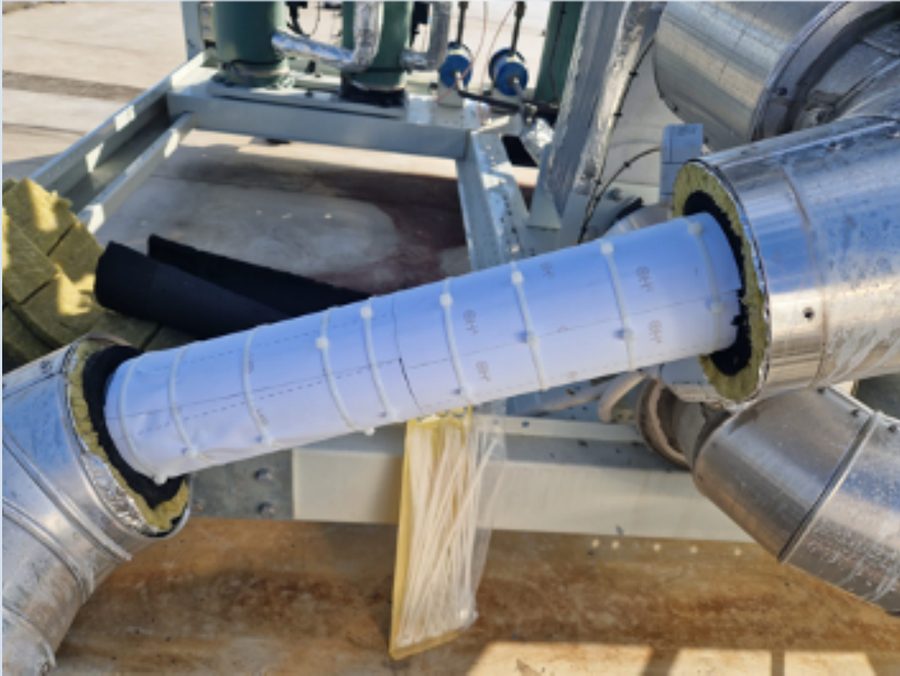
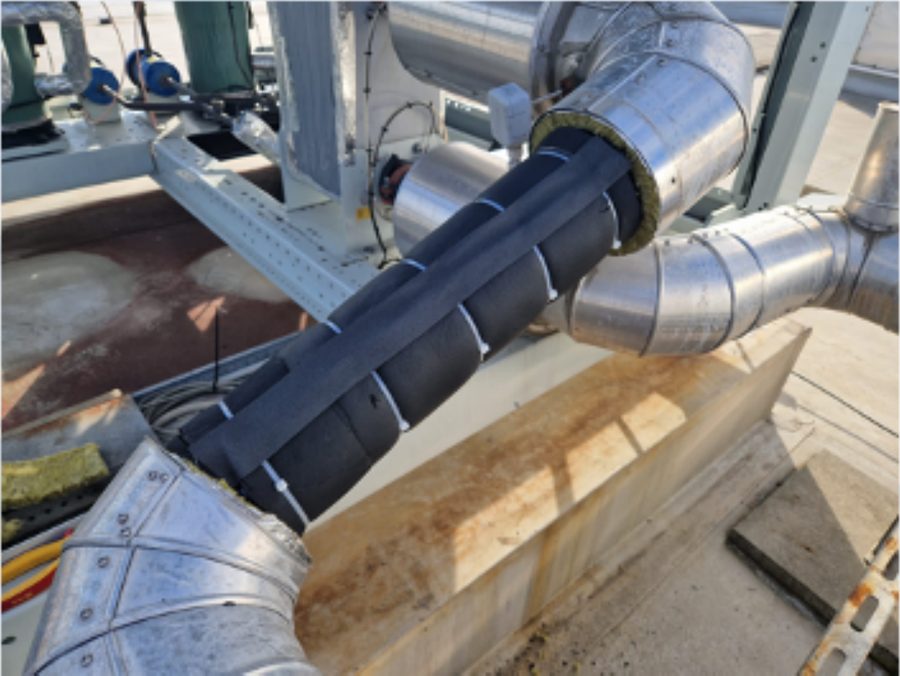
OH4 uses magnetic sheeting wrapped around the outside of pipework. The system is intended to improve heat transfer. It has no electrical connection and nothing is added to the water.
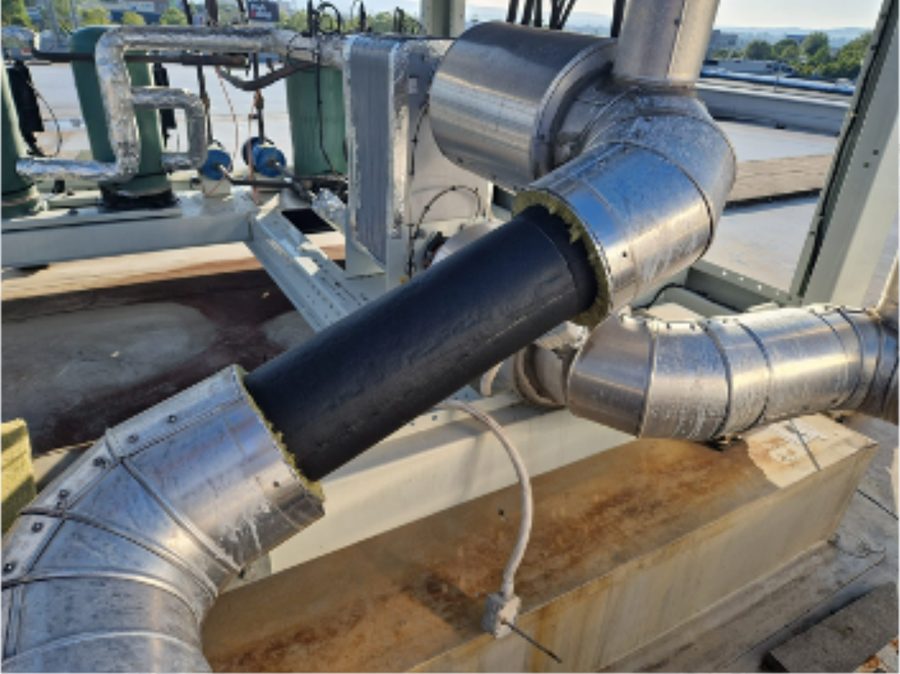
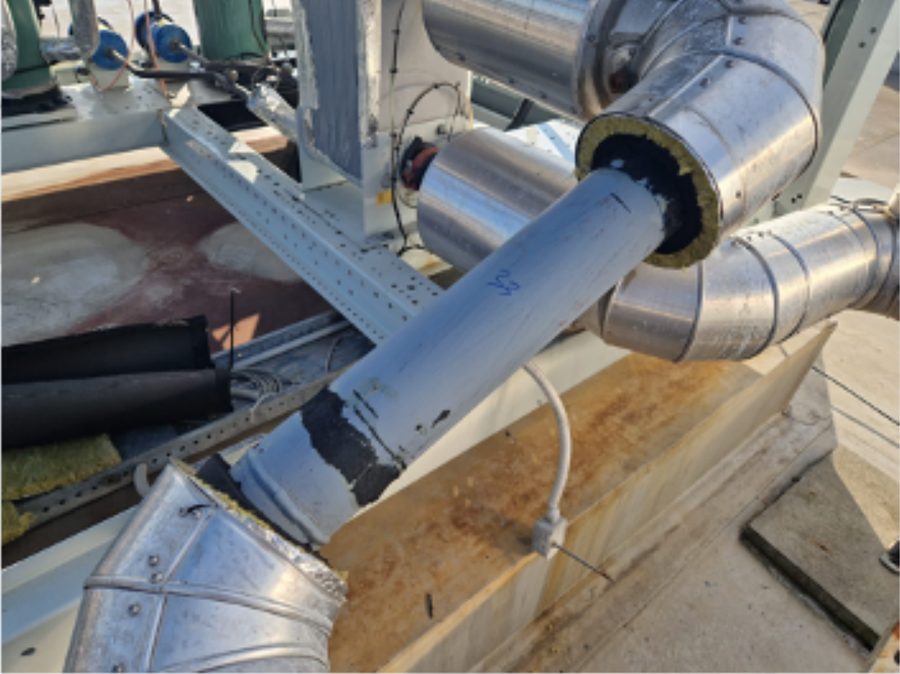
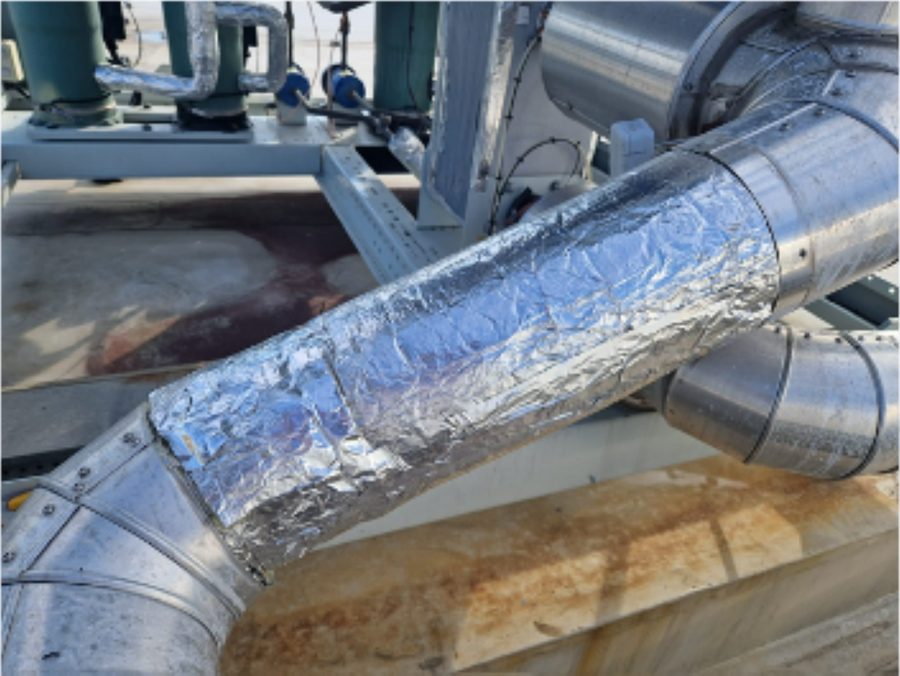
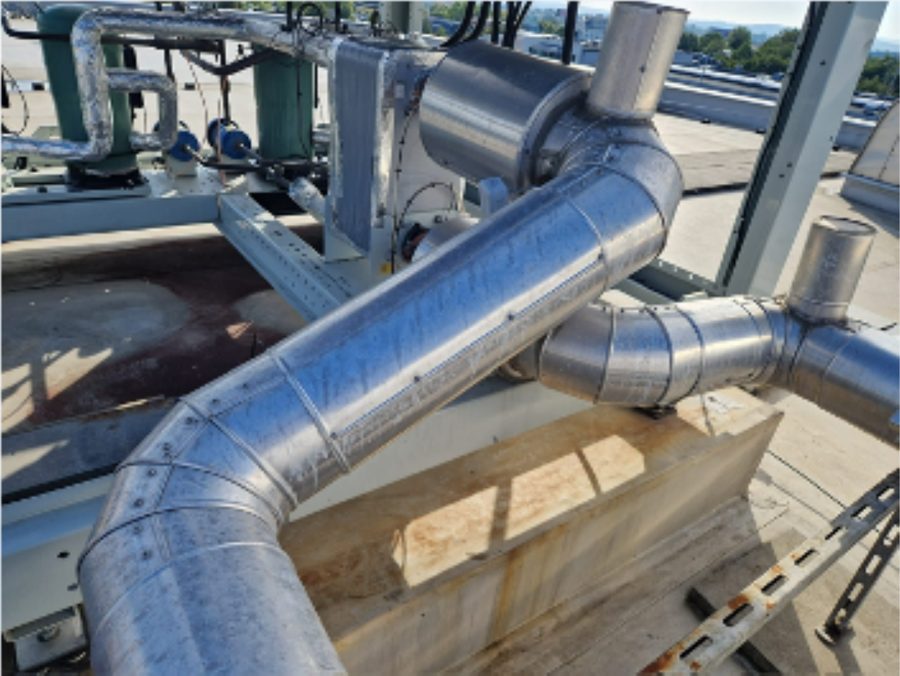
The installation requires no cutting or draining. Where insulation or cladding is opened for access, it is reinstated around the fitted system. Your plant keeps running.
The survey checks the proposed installation and available meter data before you decide whether to proceed.
Inside the pipework
Water in motion.
OH4 fits around the outside of existing pipework. Your pilot assesses energy performance using your own meter readings.
See what actually gets installed
The installation.
From start to finish.
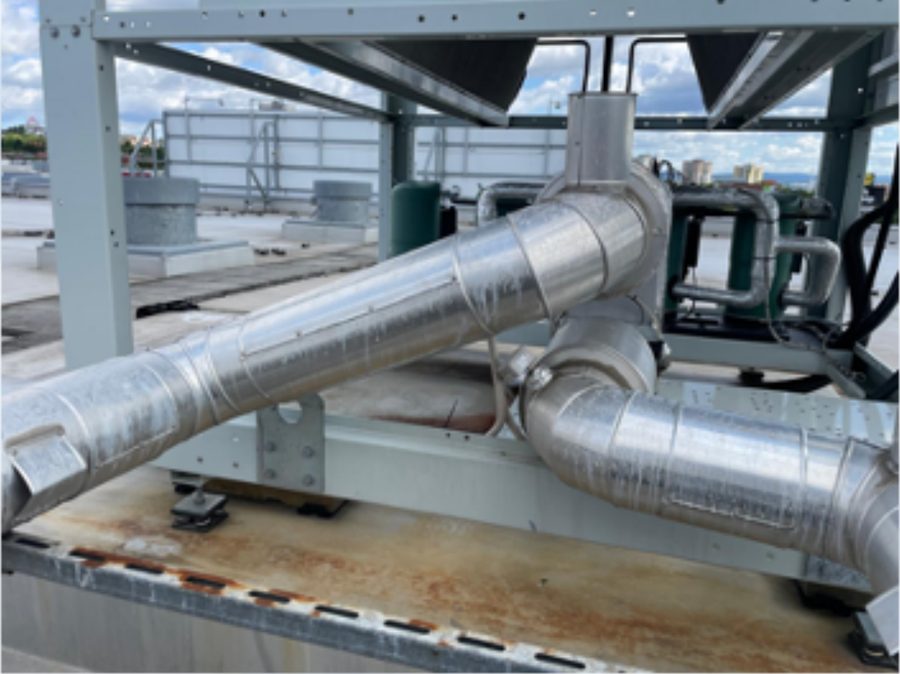
A real installation on a rooftop air-cooled chiller. Swipe through the photographs to see each stage.
SWIPE OR SCROLL ACROSS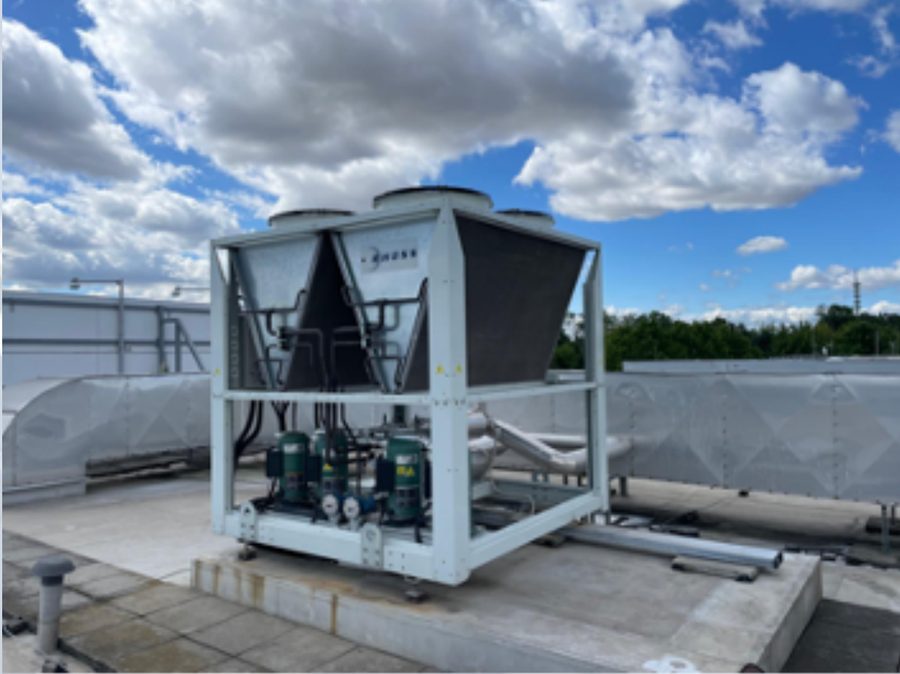
The route to a wider rollout
Run a pilot.
Review your own result.
Survey the building
We review your system, pipework, access and available meter readings. We discuss whether a pilot is worth considering.
Agree the scope and measurement plan
Review a proposal for one building. Agree the baseline, meters, monitoring period, adjustments and responsibilities before installation.
Install and monitor
Fit the system around the existing pipework. Record meter readings and changes in weather, occupancy, controls or building use.
Assess the evidence
Review the comparison with your facilities, engineering and finance teams. State the limitations, including an inconclusive result or a saving that is not demonstrated. Use that evidence to inform any wider rollout.
For building services engineers
Questions belong
at the start.
The physical installation and the evidence for energy performance need separate assessment. The mechanism of magnetic fluid treatment remains debated. A fall in consumption alone does not establish what caused it.
Before a pilot starts, review:
- Pipework, fluid, operating temperatures, insulation and maintenance compatibility.
- The meters and loads included, baseline dates and assessment period.
- Weather, occupancy and operating changes, with adjustments shown separately from readings.
- Comfort checks, setpoints, excluded data and uncertainty.
- Who reviews the result and how inconclusive evidence will be treated.
Your pilot records
Keep the readings with the evidence.
Invited clients can sign in to the V1 portal to record meter readings, view their building’s comparison and read V1’s review notes. Your team can refer back to the dates, meter and source behind each record.
A consumption comparison is not automatically a verified OH4 saving. Weather, occupancy, IT load and other changes still need to be considered in the agreed measurement plan.
Client portalAccess is arranged by V1 when your project is set up.
A few practical questions
Is there any downtime?
The system fits around existing pipework while the plant keeps running. There is no cutting, draining or electrical connection.
How soon can we assess the result?
The monitoring start date and assessment period are agreed before installation. Enough data is needed for a fair comparison. An early change in consumption is not, by itself, a verified saving.
What happens if no saving is demonstrated?
The report should state that finding and any limitations. Review the outcome against the agreed method and changes at the site. A wider rollout is a separate decision.
What should our procurement team check?
Share your supplier requirements before work is agreed. Your review may cover the installer, insurance, site procedures, product terms and the proposed measurement method. Consider these alongside the written proposal for your building.
Does a published result tell us what we will save?
No. Each result relates to its own site, included loads and assessment period. Read the individual case studies and agree a comparison for your building.